| |
| Thursday, 05 November 2026 |
| An Introduction to the Newlyn School (1880 – 1910) |
| Alison Bevan |
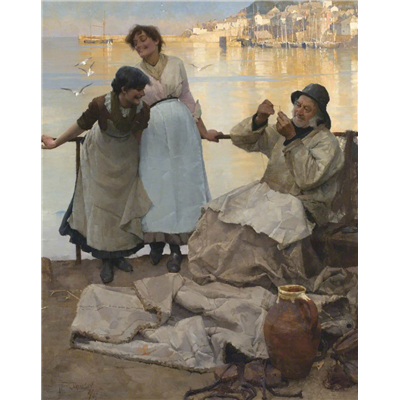 |
In the 1880s, the fishing village of Newlyn in the far West of Cornwall became a mecca for rural realist painters, who documented the lives of the local community in their beautiful and moving paintings. This talk will outline the key characteristics of this famous art movement, introducing the ‘father of the Newlyn School’ Stanhope Forbes and his talented wife Elizabeth (nee Armstrong), along with a host of their fellow artists, including Frank Bramley, Walter Langley, Albert Chevallier Tayler and Henry Scott Tuke tales, as well as some of the real-life characters they depicted.
Since graduating in History of Art from Nottingham University in 1986, Alison Bevan (née Lloyd) has spent her entire career working in public art galleries. Starting out at the Graham Sutherland Gallery in her home county of Pembrokeshire, she then spent ten years organising and curating exhibitions at the Glynn Vivian Art Gallery in Swansea, where she honed her broadcast media skills, including presenting a weekly Arts News feature on BBC Radio Wales, 1995-6. In 1999, Alison took up the role of Director of Penlee House Gallery & Museum, Penzance. Here she became an acknowledged expert on the Newlyn, Lamorna and St Ives artists colonies (1880-1940), a subject on which has lectured in the UK, USA and France. She raised the profile of this area of art through initiating national and international touring exhibitions, and contributing to numerous publications and television programmes, and in 2013 was awarded the British Empire Medal for services to Cultural Heritage in Cornwall. From 2013-2024, Alison was Director of the RWA (Royal West of England Academy) – Britain’s only regional Royal Academy of Art: an extraordinary historic institution whose Academicians have included leading figures of the Newlyn School and Bloomsbury Group, and today include Sir Peter Blake, Sir Frank Bowling and Eileen Cooper. Now based in Chepstow and working as a freelance lecturer, curator and consultant, she is also Chair of Bristol Museums’ Oversight Board; a Fellow of the Museums Association, and an Honorary Research Fellow of the University of Bristol. |
|
| Thursday, 03 December 2026 |
| Comedy Classical (humour in music) |
| Emma Johnson |
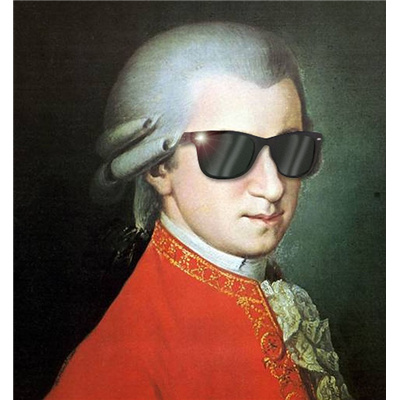 |
How do composers make us laugh? In this hour long talk we look at snippets of the classical cannon from Mozart's A Musical Joke and Saint-Saens' Carnival of the Animals, to Malcolm Arnold's Grand Overture for Three Vacuum Cleaners, a Floor Polisher and Four Rifles, taking in along the way footage of Charlie Chaplin, Dudley Moore and Victor Borge, to uncover the techniques composers use to make us chortle.
With 30 CDs to her name, Emma Johnson is one of the few clarinettists to have performed as a soloist all over the world. She also enjoys giving talks about music - Woodwind Wizardry and The Poet John Milton were both broadcast by BBC radio and she has lectured about composers Gerald Finzi and Malcolm Arnold for the internet company Tonebase, as well as about Schubert and Brahms for Martin Randall Travel. Johnson studied Music and English at Pembroke College, Cambridge University, where she was the first woman to be made an Honorary Fellow. She was honoured by the Queen with an M.B.E. in 1996. Her charity, the Emma Johnson Music Foundation, gives workshops in primary schools to introduce children to instrumental music. |
|
| Thursday, 04 February 2027 |
| Springs, Gears and Genius, the Golden Age of Automatons |
| Roger Mendham |
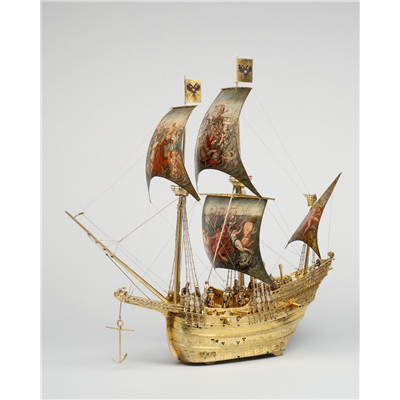 |
This lecture looks at the evolution of those wonderful, complex objects that sought to mimic life long before the word "robot" was coined in 1920. The development of spring driven clockwork mechanisms in the mid 15th century opened the opportunity for amazing new ‘automatons’. From animated figures to models of galleons that would move down the dining table, accompanied by music, animation and even canons that fired – these automata were designed to entertain and, more importantly, impress as objects of status, wealth and modernity. The Golden Age of Automata peaked in the 18th century, with objects such as "The Writer"—a mechanical boy composed of 6,000 parts—which could dip a quill and write custom text, effectively acting as an analog computer. These mechanical marvels were more than just toys and this talk includes some of the most remarkable automata, whose gears and springs evolved into the complex machinery of the modern world.
A keen and accomplished photographer Roger has gained Distinctions from the Royal Photographic Society and has recently completed 3 years as President of the Surrey Photographic Association. His artistic taste is predominantly 20th century and he is particularly interested in the visual aspects of art. He has studied the evolution of photography from its earliest days in the early 1800s to becoming a major art form in the late 20th and now 21st centuries. An experienced public speaker, his talks are all richly illustrated with both his own and images from some of the leading photographers in history. |
|
| Thursday, 04 March 2027 |
| Dumfries House - An Exceptional Commission |
| Jonathan Meyer |
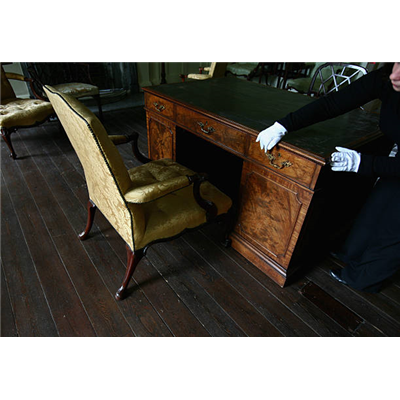 |
The furniture made by Thomas Chippendale for Dumfries House is one of the most completely documented collections of his work. This lecture considers the furniture, how it related to the commission and to the designs of Thomas Chippendale. It will also examine other furniture commissioned by William Crichton-Dalrymple, 5th Earl of Dumfries by Francis Brodie, the Edinburgh cabinet maker, whose son William Brodie became the model for Dr Jekyll and Mr Hyde, and other cabinet-makers. The saving of Dumfries House by the intervention of Prince Charles and its subsequent restoration will also be touched on.
Jonathan graduated from Oxford University with a degree in Theology, and has worked for Bonhams, Sotheby's and the Fine Art Auction Group. He has also headed up the 19th Century Furniture Department for Sotheby's in Europe. He has lectured in America, Singapore and Taiwan and written numerous articles, including contributions to British Furniture 1600-2000 (2005), and published Great Exhibitions: London, New York, Paris and Philadelphia, 1851-1900 (2006). He is a fellow and past chairman of the Royal Institution of Chartered Surveyors Fine Arts and Antiques Faculty. |
|
| Thursday, 01 April 2027 |
| How Great Design Influenced the Railways |
| Mark Ovenden |
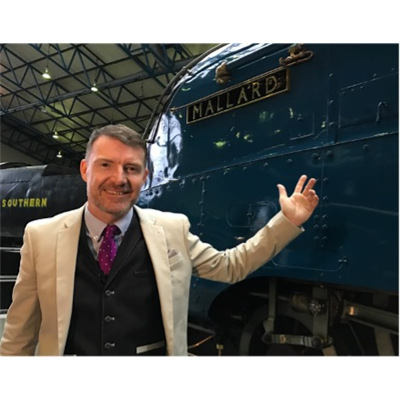 |
From those gorgeous 1930s travel posters, through nationalisation of the railways in 1948, with their bright regional colours, to the creation of the famous BR Double-Arrow symbol in the 1960s...it's surprising how British railways have led the way in terms of design. In this lecture we reminisce over those beautiful graphics, bygone days of railway architecture and travel. We'll pay homage to the wonderful Tube map by Harry Beck and look to the future of train and station design. So get your tickets ready for inspection: we're on the right track!
Mark Ovenden is a broadcaster and author who's sold a quarter of a million books and appeared on many TV and radio programmes. He specialises in the subjects of industrial design and architecture - especially in the world of public transport. Since he became AS accredited in 2018 he's delivered scores of lectures to societies all over Britain and also in Europe: the most popular being his talk on the London Underground.
His first book (a New York Times "Bestseller") was a guide to the maps of Transit systems across the planet and it's been re-issued many times. His works have been translated by Penguin and others into half a dozen languages.
His titles include two books about the Paris Metro: two on Railway Maps, and others about the New York Subway; the London Underground; typeface design; Manchester's Metrolink; Airline Maps; Underground Cities and Cartography design.
He has worked at the BBC producing programmes for Radios 1's John Peel and Annie Nightingale, in commercial radio as a journalist and newsreader, and in television as a researcher and even for MTV as a music programmer. Mark recently fronted a TV his own documentary for BBC Four (on the subject of typefaces) and he presented another documentary for BBC Radio 4 on architecture. Other programmes and books are in the works. He is currently the host of there UK's only weekly FM/DAB radio show about transport and design (also a podcast). He recently gained a Masters Degree in Railway Studies. |
|
| Thursday, 06 May 2027 |
| A Dutch painter and illusionist: Samuel van Hoogstraten (1627-1678), his life and work |
| Sophie Oosterwijk |
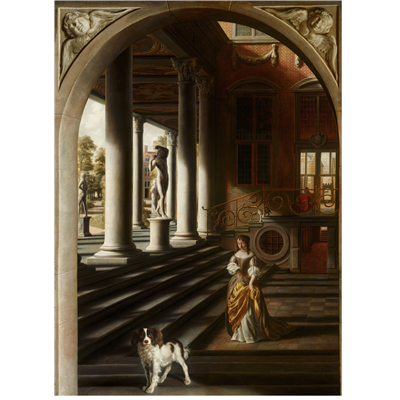 |
The Dutch painter Samuel Dirksz van Hoogstraten made quite a name for himself in his relatively short life. Born in Dordrecht in 1627 he was initially trained by his father. Yet it was his training with Rembrandt in Amsterdam from 1640 to 1648 that influenced his work, from portraits to genre and still-life painting. He spent several years abroad but eventually married in 1656 and settled in his native Dordrecht. It may have been the Carel Fabritius (painter of The Goldfinch) who inspired Van Hoogstraten's interest in perspective and three-dimentional trompe l'oeil illusions, which fascinate viewers today. Some of his most famous works are now in UK collections, e.g. his incredibly clever Peepshow, a perspective box with architecturally impossible views of a Dutch domestic interior (National Gallery, London). His huge View through a House (NT, Dyrham Park, Glos.) was commissioned by politician Thomas Povey for his London townhouse but later given by him to his nephew for his new country home. These two works show how Van Hoogstraten managed to create both small and large-scale illusions that fool the eye. Van Hoogstraten's last great success was not a painting but an art-theory book, published in the year of his death in 1678, which contains ideas about the art and practice of painting but also anecdotes about Rembrandt and his studio.
Sophie was born in Gouda (Netherlands) and has an MA in Medieval Studies (York) and a PhD in Art History (Leicester), and an MA and PhD in English Literature (Leiden). She has taught at the universities of St Andrews, Leicester and Manchester, Sotheby’s Institute of Art, National Trust, V&A, U3A, WEA and other organisations, and organised many study days, tours and visits. She is also a regular lecturer for Cambridge University and travel companies, and Vice President of the Church Monuments Society. She has numerous publications under her belt. |
|
| Thursday, 03 June 2027 |
| Banned: Savitsky and the secret hoard of Avante Garde Art |
| Chris Aslan |
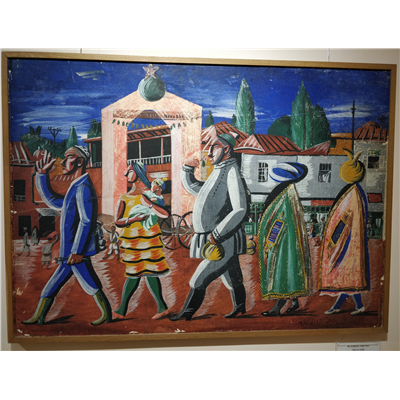 |
Despite the flourishing of Russian Avante Garde Art during the first 30 years of the 20th Century, as Stalin rose to power, he banned all but Socialist Realist expressions of art. To own anything else was dangerous enough but to start collecting it was unthinkable. And yet this is what Igor Savitsky did. He travelled throughout the Soviet Union, buying, bribing and cajoling until he’d amassed the second largest collection of Russian Avante Garde art in the world. The State Museum of Karakalpakstan, situated near the south shores of the Aral Sea is now a Mecca for art lovers.
Chris Aslan was born in Turkey and was raised there and in war-torn Beirut. This set him on a course for an adventurous life and he has spent two years at sea, and lived in Central Asia for 15 years. He started off in Khiva, a desert oasis in Uzbekistan, establishing a UNESCO workshop reviving fifteenth century carpet designs and embroideries, and becoming the largest non-government employer in town. He was deported as part of an anti-Western purge, and took a year in Cambridge to write A Carpet Ride to Khiva. Chris then spent several years in the Pamirs mountains of Tajikistan, training yak herders to comb their yaks for their cashmere-like down. Next came a couple more years in Kyrgyzstan living in the world’s largest natural walnut wood and establishing a wood-carving workshop. Since then, Chris has studied and rowed at Oxford and now divides his time between lecturing for the Arts Society, writing fiction and non-fiction in his mountainous home overlooking the sea in North Cyprus where he is overrun by cats, and returning to Central Asia to lead tours whenever he can, having left a large chunk of his heart there. His latest book is Unravelling the Silk Road. |
|
| Thursday, 01 July 2027 |
| Neo-Classicism: From Revolution to Empire |
| Matthew Morgan |
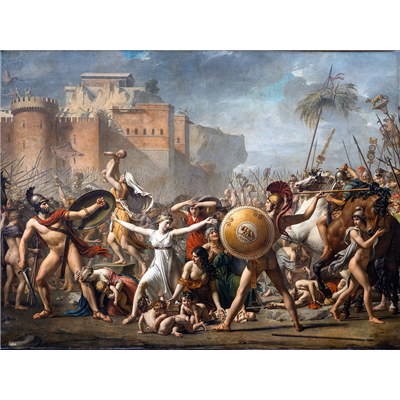 |
Increased exposure to artifacts excavated from classical Roman and Greek sites encouraged a deeper interest in, and emulation of classical art. Promoted by a range of dealers, antiquarians, artists and, in some cases, secret agents, Neo-Classicism was the new art for the newly (and in some cases, already) wealthy. With the French Revolution it became a new style poised for a new regime. From the living rooms of newly constructed elite houses and estates in London, Paris and Berlin, Neo-Classicism became the style of revolutionary anti-monarchists, as exemplified by the work of Jacques-Louis David. This talk will chart the rise of this forward-and backward-looking style.
Matthew's degree is from Cambridge; he studied at the Courtauld for his MA and his PhD is from Birkbeck, University of London. He was Museum Director of Turner’s House in Twickenham. He has taught for more than eight years at Birkbeck, University of London as Head of the London Learning Team at the Royal Collection. At the National Gallery, he devised and delivered a wide range of learning events, and earlier in his career he worked as a Director in the Valuations Department at Christie’s. Beyond museums, he has contributed to TV documentaries, podcasts, and radio programs, and created a series of short films about paintings available on YouTube. |
|
| Thursday, 02 September 2027 |
| Akhenaten: revolutionary ruler of Ancient Egypt |
| Vicky Bailey |
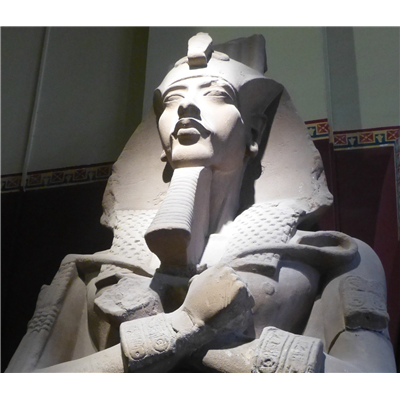 |
Akhenaten stands out today as one of the most notorious rulers of Ancient Egypt - quite an achievement! In his short reign, he revolutionised the religious system of Egypt and set up a new capital city at the site known as Tell el-Amarna, along with his wife Nefertiti. This is where the boy-king Tutankhamun spent his childhood throughout this era. The works of art which emerged from his regime are completely unique and emphasise his status today as the only monotheistic pharaoh in the whole 3,000-year history of Ancient Egypt.
Vicky Bailey became a London Blue Badge Tourist Guide in 2005, receiving an award as the 'Best Guide in Gallery Exams'. One of her main areas of interest is Ancient Egypt. She studied hieroglyphs and carried out volunteer work in the Egyptian department at the British Museum. She leads specialist tours at relevant sites across London and also delivers lectures on this subject. Highlights of her guiding career have included giving a talk on BBC Radio 4 about the execution site of Tyburn and writing a book on the British monarchy. |
|
| Thursday, 07 October 2027 |
| The Art of the Crusades |
| Helen Dejean |
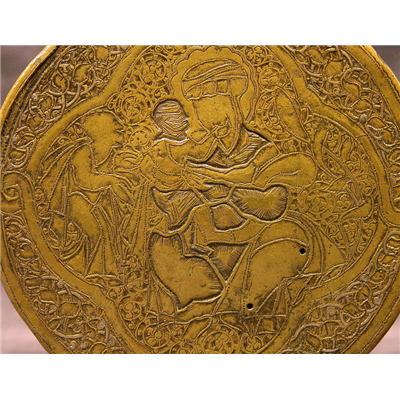 |
This lecture is not about the Art of War, or Crusader knights making art! Nor is it exclusively about Western Medieval art that depicted the Crusades. It is about the extraordinary array of works of art and architecture that were produced in the Holy Lands between 1099 and 1291 for the people living in that crazy Crusader world.
Helen Dejean specialises in Byzantine and Late Medieval Italian art. She is currently reading for a PhD in Byzantine history of art at The Courtauld Institute, London where she is also an Associate lecturer on the Undergraduate and Short Courses programmes. Helen holds a Masters degree in each of her subject areas from the Courtauld, a BA Hons from the Open University, a diploma in Fine Art and a teaching qualification. Helen is also an art history tutor at City Lit, London and has previously worked in the London Art Auction world, as well as in the museum sector. For many years, Helen combined her knowledge of art history with her specialist medieval panel painting practice to deliver art commissions and courses in the UK, Italy and Sinai. Helen is the owner of ‘Elenis Icons’, through which she continues to undertake commissions for churches, cathedrals and clients worldwide. |
|
| Thursday, 04 November 2027 |
| ART NOUVEAU: Art and Design in France 1889-1914 |
| Anne Anderson |
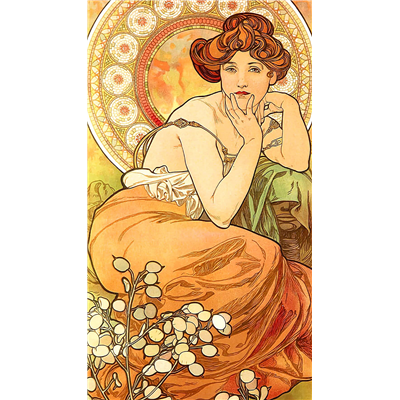 |
In 1900, Art Nouveau was at its apogee: in Paris, Nancy, Brussels, Barcelona, Glasgow and Vienna. This talk focuses on the designers working in France and Belgium: Alphonse Mucha, the premier poster designer; René Lalique, who produced the finest jewellery; Hector Guimard, the creator of the Paris Metro; Victor Horta, who fashioned the first Art Nouveau house in 1893, and Emile Gallé, the glass designer who led l’Ecole Nancy. Curving, undulating forms were used to create figurines, furniture, ceramics, glass and jewellery, as well as covering entire buildings.
Currently a guide and lecturer, Anne Anderson specialises in Art Nouveau and Arts and Crafts art tours.She has an extensive resume and career. Awards include: Research Society Victorian periodicals, Curran Fellowship Research Grant, 2021, Robert R. Wark Fellow, Huntington Library, Art Collections, and Botanical Gardens, CA, 2018-2019.
Last Fellow of American Material Culture, American Antiquarian Society Fellowship 2014/15
Fellow of the Henry Francis Du Pont Winterthur Museum and Library, Delaware Fellowship, 2009-10.
Cumming Ceramics Research Scholarship 2007 and 2010 for projects relating to 19th century ceramics.
Fletcher Jones Fellow of the Huntington Library, Art Collections, and Botanical Gardens CA, 2008-09.
Fellow Society of Antiquaries since 1994.
Exeter University 1998-2001 Ph.D. Humanities, Exeter University, 2001. |
|
| Thursday, 02 December 2027 |
| A Pre-Raphaelite Christmas |
| Alison Barker |
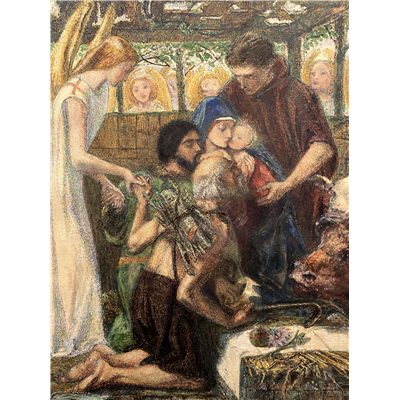 |
Glowing colours, rose bowers, heroic knights and red-haired damsels in distress, the art of the Pre-Raphaelites conjures up jewelled scenes from medieval literature, tales of king Arthur, Shakespeare’s plays and the poetry of Keats and Blake. It wasn’t just romantic history or gothic fantasy that these artists depicted, however, but biblical narratives. They brought their bright colour palette and sense of intense emotion to bear on the events of Christ’s life, in particular those surrounding His birth. At the end of Charles Dickens’ a Christmas Carol, it is said of Ebenezer Scrooge, that he knew how to keep Christmas well, and the same can be said of the Pre-Raphaelite
Dr Alison Barker taught History and Art History at further and higher education for over twenty years and currently works at the University of Essex. She speaks widely to diverse groups on many historical and art historical topics, and has led guided tours at the British Museum and the National Gallery. Alison wrote her PhD thesis on the depiction of Saint George in art and has published work on his image in both England and Italy. She has presented Papers for the Renaissance Society of America in both Boston and Dublin. Her book, The Dissemination of Saint George in Early Modern Art has been recently published by Routledge. |
|